
Massive Upgrade for Central Valley Biosecurity as State Opens High Tech Vet Lab
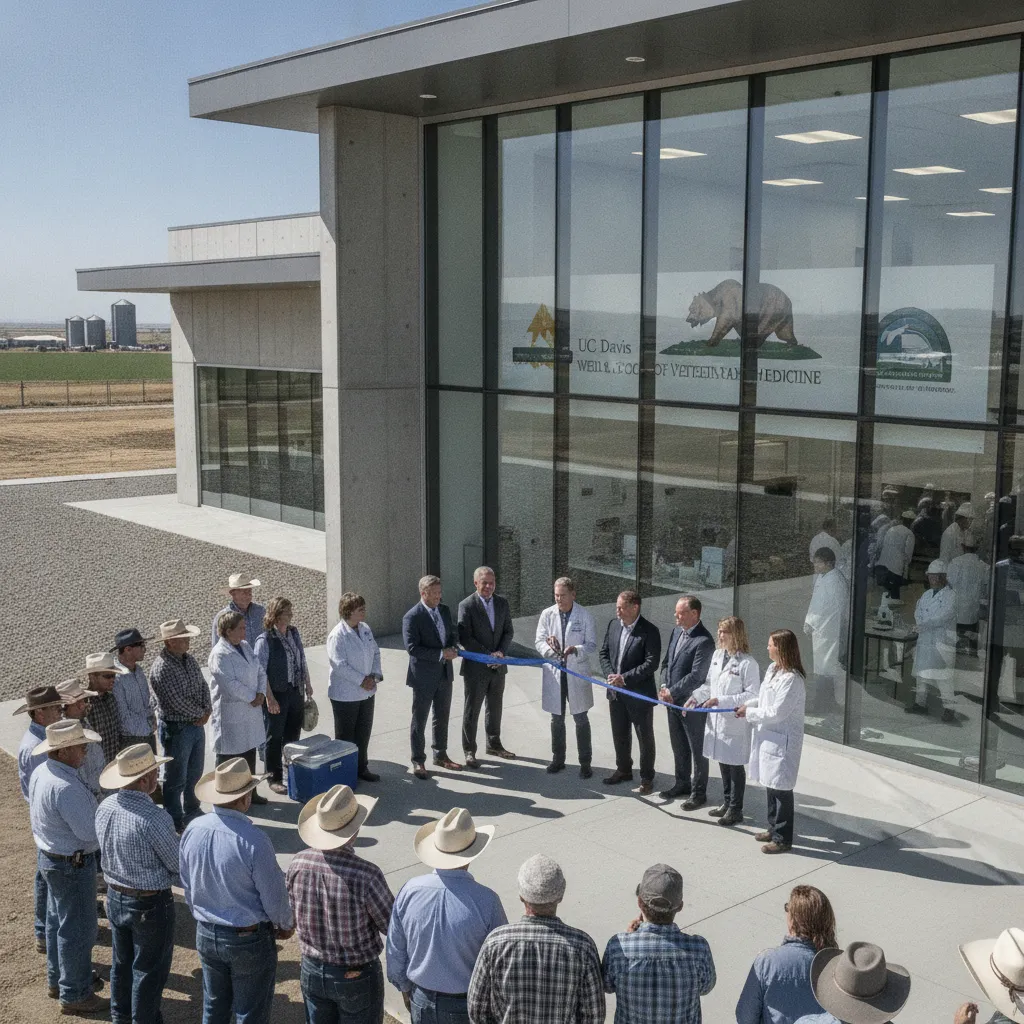
Farmers and ranchers in California’s Central Valley finally have a local hub for comprehensive animal diagnostics following the opening of a massive new laboratory in Turlock. The 108 million dollar facility represents a quantum leap in scale, replacing a modest five thousand square foot building with a sprawling forty four thousand square foot complex. Operated by the UC Davis Weill School of Veterinary Medicine alongside the California Department of Food and Agriculture, the site is designed to act as a critical shield for the state’s multibillion dollar food supply.
For years, the previous Turlock location was limited strictly to poultry research, forcing owners of cattle, horses, pigs, and goats to endure long drives to facilities in Davis or Tulare just to get answers about deceased livestock. This logistical hurdle often delayed vital results during potential outbreaks. By expanding its capabilities locally, the lab can now perform detailed necropsies and advanced molecular testing on all types of livestock, significantly cutting down turnaround times for those managing herds in one of the most productive agricultural regions in the world.
Beyond just adding floor space, the project brings together personnel from both university and state agencies under one roof to foster better communication when fighting diseases like avian influenza. Staffing levels are expected to nearly double at the site to handle everything from blood work and parasitology to histology. According to officials, having these high tech tools available on the front lines allows scientists to collaborate more effectively with rural veterinarians and producers to stop threats before they spread through the regional economy.
The community also took time during Friday’s dedication ceremony to look back at the history of avian medicine by naming the center after Arthur A. Bickford and Bruce R. Charlton. Both men were renowned veterinary pathologists who spent decades leading the Turlock operations and earned national acclaim for their expertise in poultry disease. Their legacy now serves as the foundation for a modernized system aimed at ensuring that California’s vast diversity of livestock remains healthy and secure for consumers across the country.